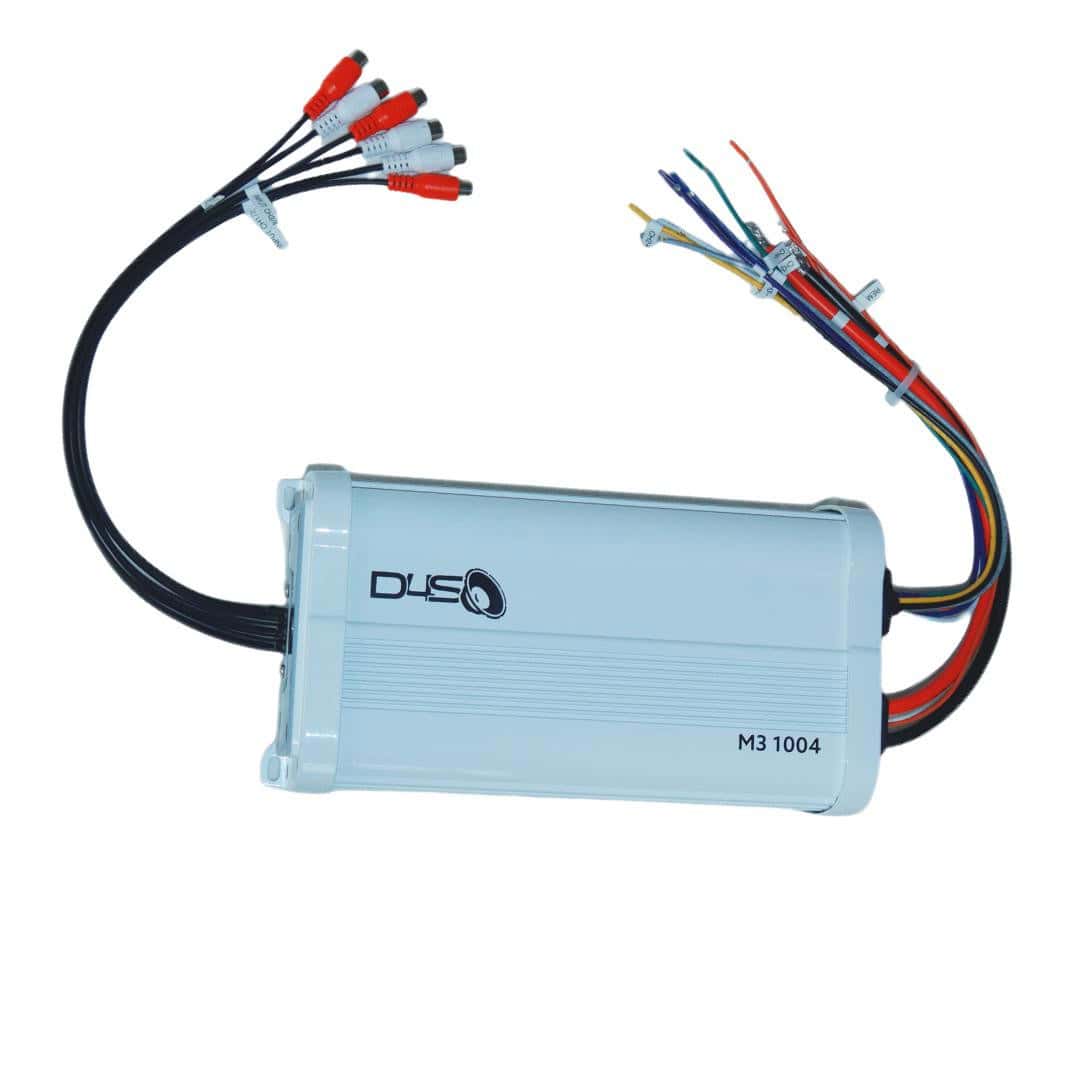
Motorcycle amplifiers are not car amps bolted onto a bike. They have to survive weather, vibration, and a charging system with almost no spare capacity, while fitting in a space the size of a lunchbox. Done right, a motorcycle amp turns a pair of handlebar or fairing speakers into audio you can actually hear at highway speed. This guide covers what makes a motorcycle amp different, how to size one, and how to install it so it lasts.
What Makes a Motorcycle Amp Different
Motorcycle audio lives in the open air. Rain, heat, road vibration, and wind noise are the enemies, and a motorcycle amplifier has to be built for all of them, much like the marine audio gear covered in our wakeboard tower speakers buying guide. The key differences from a car amp:
- Compact chassis that fits under a seat, in a fairing, or on handlebars.
- Weather resistance, with conformal-coated circuit boards and sealed controls.
- High efficiency, usually class D, so it draws as little current as possible.
- Vibration tolerance, with solid construction and no loose internal parts.
Efficiency is the big one. A bike’s stator and regulator have maybe 20 to 30 amps of spare capacity at cruising RPM, and your heated grips, lights, and phone charger are already using some of it. A class D motorcycle amp gets you 100 to 200W RMS per channel without taxing the charging system. A class A/B amp of the same output would drain the battery at idle and stress the stator at speed.
How Much Power Does a Motorcycle Amp Need?
For a pair of 6.5 inch or 5.25 inch motorcycle speakers, 75 to 150W RMS per channel at 4 ohms is the sweet spot. That is enough to be clearly audible at 70 mph with a helmet on, without overpowering the speakers. Most quality motorcycle speakers are rated 50 to 150W RMS, so a 2 channel amp in the 100W RMS per channel range is the standard match. Baggers running four speakers can step up to a 4 channel amp, and our 4 channel amplifier guide shows how that layout works.
If you are running a subwoofer on a bike, which is a growing trend on baggers and tourers, add a monoblock for the sub and keep the 2 channel amp for the speakers. The same rules apply as in a car: match RMS to RMS and respect the ohm load. Our 2 channel amplifier guide covers the wiring details, and the monoblock amp guide covers sub duty.
2 Ohm vs 4 Ohm Motorcycle Speakers
Many motorcycle speakers are 2 ohm, because a 2 ohm load pulls more power from a small amp. That works, but check the amp’s 2 ohm rating before you buy. A 2 channel amp rated 100W RMS at 4 ohms and 150W RMS at 2 ohms is ideal for 2 ohm bike speakers. If the amp is only 4 ohm stable, buy 4 ohm speakers. Matching impedance is the difference between a system that plays clean and one that overheats.
How to Install a Motorcycle Amplifier
The install is straightforward if you follow the order:
- Disconnect the negative battery terminal first. Always.
- Mount the amp where it gets airflow and stays dry. Under the seat is common, but a fairing mount keeps it cooler and more protected.
- Run the power wire from the battery positive through a fuse within 12 inches of the battery, then to the amp.
- Ground the amp to bare frame metal, not a painted bolt. Scrape the paint off and use a star washer.
- Run RCA signal from the head unit, or use a line output converter if the bike has a factory radio.
- Connect the remote turn-on wire to the head unit’s remote output, or use a switched 12V source.
- Set the gains with the head unit at about 75 percent volume, then tune by ear from there.
- Reconnect the battery, test, and zip-tie all wiring so nothing rubs or pinches.
Wiring Tips for Bikes
- Use marine-grade or heat-shrink connectors everywhere. Vibration loosens crimps.
- Route wiring away from the exhaust and moving parts, and check steering lock-to-lock clearance.
- Use a fused distribution block if you are running more than one amp.
- Consider a small lithium battery upgrade if you run the stereo at idle often.
Common Motorcycle Amp Mistakes
- Buying a car amp and mounting it exposed. It will corrode and die.
- Skipping the fuse on the power wire. A short on a bike battery is a fire.
- Grounding to a painted or rusty bolt, which causes noise and weak output.
- Overpowering the speakers. A 200W RMS amp on 75W RMS speakers will smoke them.
- Ignoring the charging system. If the bike’s voltage drops below 12.5V with the stereo on, the amp clips and the speakers suffer.
Ready to ride with sound? Shop motorcycle amplifiers at Down4Sound, and pair one with a compact 2 channel amp from the Down4Sound 2 channel lineup for a clean, efficient install. If you are also adding a sub to the bike, our monoblock amp guide and 1200 watt amp guide cover the bass side of the build.
Common Questions About Motorcycle Amps
Are motorcycle amplifiers waterproof?
Quality motorcycle amps carry a real marine or IPX rating, with conformal-coated circuit boards and sealed controls, so they survive rain, splashes, and bike washes. Water resistant is the accurate term, so check for an actual IPX or marine rating before you buy instead of trusting the word waterproof on the box.
How many watts do I need to hear music at highway speed?
Plan on 200 to 400 watts RMS total for highway-speed audio on a bike. In practice that means 75 to 150W RMS per channel into a pair of motorcycle speakers, which is enough to stay clearly audible at 70 mph with a helmet on.
Will an amp drain my motorcycle battery?
Not if the amp is sized correctly for the bike. Motorcycle charging systems are small, often with only 20 to 30 amps of spare capacity, so current draw matters more than it does on a car. An efficient class D amp in the 100 to 200W RMS per channel range plays fine at cruising RPM; just avoid long listening sessions at idle.
Can I install a motorcycle amp myself?
Yes, if you are comfortable with basic 12V wiring. The job comes down to a fused power wire from the battery, a clean ground to bare frame metal, signal from the head unit, and a remote turn-on connection. Follow the install order in this guide and route wiring away from heat and moving parts.
Keep Building
- Amp Finder Guide: How to Choose the Right Car Amplifier
- Monoblock Amp Guide: What It Is and How to Choose One
- 2 Channel Amplifier Guide: Uses, Power, and Wiring
Wind and road noise will drown a weak system, so your bike needs real wattage. Shop the motorcycle amplifiers at Down4Sound, built to survive weather and vibration. Financing is available so you can upgrade the audio now and pay over time.