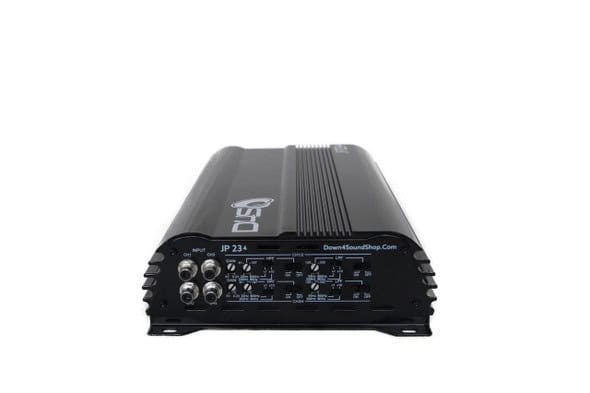
A monoblock amp is a single-channel amplifier built for one job: delivering maximum clean power to a subwoofer. If you want amplified bass that hits hard without cooking your electrical system, a mono amp is the tool, and this guide covers how they work, what specs actually matter, and how to match one to your subs. First mono block amp or competition-grade class d monoblock amplifier, the rules are the same: RMS power, ohm load, and amplifier class decide everything.
What Is a Monoblock Amplifier?
A monoblock amplifier has one channel of output. That sounds simple, but it is the reason mono amps dominate subwoofer duty. Bass is monophonic in almost every recording, so there is no benefit to splitting it across left and right channels. A mono amp takes the full power supply and puts it behind a single channel, which means one monoblock can deliver far more wattage than a stereo amp of the same size.
The other reason is ohm flexibility. Most monoblock amps are stable down to 1 ohm, and many handle 0.5 ohm loads. Multi-channel amps rarely go below 2 ohms per channel. That low-impedance headroom is what lets you strap two subs, run dual voice coil configurations, or wire a single sub at 1 ohm and pull the full rated power out of the amp.
Mono Amp vs Multi-Channel Amp
- A mono amplifier powers one subwoofer (or a bank of subs wired to one load).
- A 2 channel amplifier powers a pair of full-range speakers, or one sub bridged.
- A 4 channel amplifier powers door speakers, or two pairs, or a sub bridged on channels 3 and 4.
If your build is subwoofer only, a mono subwoofer amplifier is the correct choice. If you need mids and highs too, you run a separate multi-channel amp for the speakers and a monoblock for the bass. That is the standard pro setup: a 4 channel amp for the doors and a mono amp for the trunk.
Class D vs Class A/B in Monoblock Amps
The class d monoblock amplifier is the default for car audio bass, and for good reason. Class D amps switch the output transistors on and off at high frequency instead of running them in the linear region like class A/B. That makes them 80 to 90 percent efficient, versus roughly 50 to 60 percent for class A/B.
What that means in practice:
- Less current draw from your alternator and battery for the same output.
- Less heat, so smaller heatsinks and smaller chassis.
- More power per dollar, which is why 1000 watt and up mono amps are almost all class D.
The tradeoff is that early class D designs had audible noise and poor high-frequency response. Modern class D monoblocks are full range capable, and a full range monoblock amplifier can drive midbass or even full-range speakers cleanly if you need it to. For subwoofer duty, class D is the right call. Class A/B monoblocks still exist and sound great, but you pay for them in heat, size, and current draw.
RMS vs Peak: The Only Number That Matters
Every monoblock amp listing shows two numbers: RMS and peak (or max). RMS is the continuous power the amp can deliver without distortion or damage. Peak is a marketing number, often double the RMS, that the amp can only hit in brief bursts. When you match a mono amp to a subwoofer, match RMS to RMS. Ignore peak entirely.
A 5000 watt amp that is rated 5000 watts peak is really a 2500 watt RMS amp. A 5000 watt amp rated 5000 watts RMS at 1 ohm is a serious piece of gear that needs a serious electrical system. Always check the RMS rating at the ohm load you plan to run, because that number changes with impedance.
Ohm Loads: 4 Ohm, 2 Ohm, 1 Ohm, and 0.5 Ohm
Impedance is the load the subwoofer presents to the amp, measured in ohms. Lower impedance means more current flow and more power output, up to the amp’s limit. A monoblock rated 1200W RMS at 1 ohm typically puts out around 600W at 2 ohms and 300W at 4 ohms. The exact curve varies by amp, so read the spec sheet.
How you wire your subwoofer determines the load:
- One dual 4 ohm voice coil sub wired in parallel: 2 ohms.
- One dual 4 ohm voice coil sub wired in series: 8 ohms.
- One dual 2 ohm voice coil sub wired in parallel: 1 ohm.
- Two dual 4 ohm subs wired in parallel: 1 ohm.
If your amp is 1 ohm stable, wire for 1 ohm and get full power. If it is only 2 ohm stable, wire for 2 ohms. Never run an amp below its rated minimum impedance; that is how you smoke output transistors and trip protection circuits.
How to Match a Monoblock Amp to Your Subwoofer
The rule of thumb: pick an amp that delivers 75 to 150 percent of the sub’s RMS rating at your target ohm load. A sub rated 1000W RMS is happy with a 750W to 1500W RMS mono amp. More headroom is safer than less, because a clipped amp driven past its limit is what actually kills subwoofers, not raw wattage.
For a single 1200W RMS sub, a 1200W RMS monoblock like the Down4Sound JP1 is a perfect match. It is rated 1200W RMS and is stable at 4, 2, and 1 ohm, so it works with nearly any single sub wiring configuration. For a pair of 2500W RMS subs, step up to a 5000W RMS class d monoblock like the A3 5.0kw, which gives you the headroom to run both subs at 1 ohm without strain.
What to Check Before You Buy
- RMS power at your target ohm load, not peak power.
- Minimum ohm stability, and whether it matches your wiring plan.
- Subsonic filter, which protects the sub from frequencies below the box tuning.
- Bass knob (remote level control), which is nearly essential for daily driving.
- Input sensitivity range, so it can accept a low-level signal from a factory head unit.
- Fuse rating and recommended power wire size, usually 0 gauge for anything over 1500W.
Common Monoblock Mistakes
- Buying on peak wattage. A 3000 watt peak amp is not a 3000 watt amp.
- Wiring to a load below the amp’s stable minimum.
- Skipping the subsonic filter on a ported enclosure, which lets the sub unload below tuning.
- Underpowering the electrical system. A 5000W RMS mono amp needs a high output alternator, a good battery, and 0 gauge wire, or it will clip and sag.
- Setting gain by ear with the bass knob maxed. Set gain with a multimeter or oscilloscope at a clean volume level.
Ready to build? Browse the full selection of monoblock amplifiers at Down4Sound, check the Down4Sound monoblock lineup for class D mono amps rated in real RMS, and grab the JP1 1200W any-ohm monoblock for a single sub build or the A3 5.0kw 5000 watt monoblock when you need serious headroom. If you are still deciding between a mono amp and a multi-channel amp, read our 4 channel amp guide and 2 channel amp guide to see how the other half of your system should be powered.
Monoblock Amp Questions, Answered
Why use a monoblock for subwoofers?
Bass is monophonic in almost every recording, so there is nothing to gain by splitting it across stereo channels. A monoblock puts its entire power supply behind one channel and is built to stay stable into the low ohm loads subwoofers present. That is why one mono amp usually makes more usable wattage than a stereo amp of the same size.
What does 1 ohm stable mean?
It means the amp can safely drive a 1 ohm load without overheating or tripping its protection circuit. Lower impedance lets more current flow, so the amp produces more power at 1 ohm than at 2 or 4 ohms. Only wire down to 1 ohm if the amp is rated for it.
Can I run two subs on one monoblock?
Yes. Two dual 2 ohm voice coil subs can be wired to a 1 ohm or 4 ohm final load, so choose the wiring that matches your amp’s stable minimum. Then match the amp’s RMS rating at that final wired load to the combined RMS of both subs.
Do monoblock amps work for speakers?
Yes, if the monoblock is a full range design. Many modern class D monoblocks are full range capable and can drive midbass or even full-range speakers cleanly. Most builds still pair a monoblock on the subs with a multi-channel amp on the door speakers.
Next Reads
- Amp Finder Guide: How to Choose the Right Car Amplifier
- 1200 Watt Amp Guide: What 1200W RMS Really Gets You
- 0 Gauge Wire Kit Guide: What to Buy for Big Amps
A dedicated monoblock gives your subs clean, efficient bass power from a single chassis. Check out the car amplifiers at Down4Sound, from compact monoblocks to full competition power. Financing is available with options that break the total into manageable monthly payments.