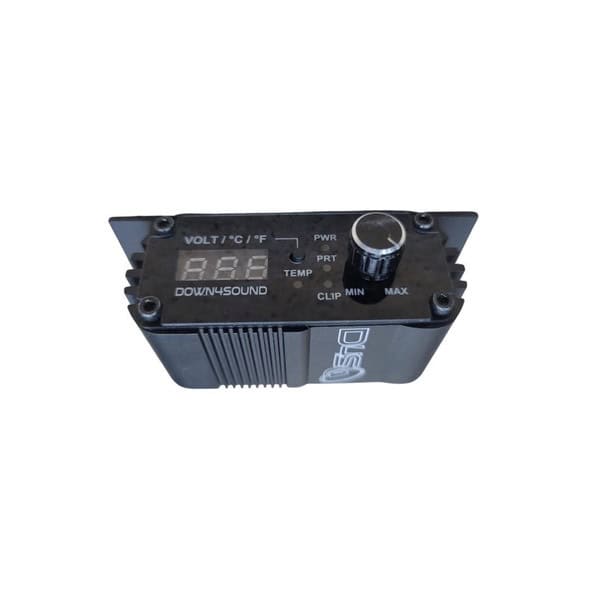
A 2 channel amplifier is the simplest full-range amp in car audio: two channels, one for the left speaker and one for the right. It powers a pair of door speakers, a set of components, or a single subwoofer when bridged. If your system is a pair of speakers and nothing else, a 2 channel amp is often the cleanest, most cost-effective upgrade you can make. This guide covers what a 2 channel amplifier does, how bridging works, and how to read the power ratings so you buy the right one.
What Is a 2 Channel Amplifier Used For?
A 2 channel amp has two output channels, normally run in stereo. The most common jobs:
- Powering a pair of full-range door speakers with clean wattage.
- Powering a component set (midbass and tweeter per side) through its crossovers.
- Powering a single subwoofer in bridged mono mode.
- Powering a pair of midbass drivers or a pair of motorcycle speakers.
The 2 channel format is also the standard for motorcycle audio, where space is tight and you only need to drive two speakers. Many riders run a compact 2 channel amp under the seat or in a fairing, which is why our motorcycle amp guide leans on 2 channel amps for most bike builds.
2 Channel vs 4 Channel vs Monoblock
- A 2 channel amplifier drives two speakers, or one sub bridged.
- A 4 channel amplifier drives four speakers, or two speakers plus a bridged sub.
- A monoblock amplifier drives a subwoofer only, with the most power and lowest ohm stability.
If you plan to add rear speakers or a sub later, a 4 channel amp gives you room to grow. If you are building a minimal system, a 2 channel amp is the right tool and nothing is wasted.
Bridging a 2 Channel Amp
Bridging combines both channels into one mono channel with roughly three to four times the power of a single channel at 4 ohms. You use the left positive and right negative terminals, and the amp sees half the impedance per channel, so a bridged 4 ohm load looks like 2 ohms per channel.
That means a 2 channel amp bridged into a 4 ohm sub is a very common budget setup: one amp, one sub, no monoblock needed. The limits are the same as any amp. If the amp is only 2 ohm stable per channel, the lowest bridged load is 4 ohms. A 2 ohm bridged load on that amp is out of spec and will trip protection or damage the output stage.
Reading Power Ratings: What 3000 2 Means
Model numbers on 2 channel amps are just as misleading as on any other amp. A model called 3000 2 is not 3000 watts per channel. That number is usually peak or max power for the whole amp, or a sum of both channels at their lowest rated impedance.
The real spec is RMS per channel at 4 ohms and at 2 ohms. A 3000 2 model might deliver 300W RMS x 2 at 4 ohms and 500W RMS x 2 at 2 ohms, with a bridged rating around 1000W RMS at 4 ohms. Those are the numbers to compare. For a pair of 100W RMS speakers, a 2 channel amp with 100 to 150W RMS per channel at 4 ohms is a perfect match.
Class D vs Class A/B in 2 Channel Amps
Class D is the efficiency winner here, just like it is in monoblocks and 4 channel amps. A class D 2 channel amp runs cool, draws less current, and fits in a smaller chassis than a class A/B amp of the same output. For motorcycle installs, that efficiency and small footprint are the whole point, because bike electrical systems have no spare capacity.
Class A/B 2 channel amps still have fans, mostly for their warm sound signature and simple design. But for car and bike use, class D is the practical choice. The efficiency difference matters most at high power, so if you are looking at a 3000 2 class amp, class D is essentially mandatory unless you are also upgrading your alternator.
How to Choose a 2 Channel Amplifier
Match the amp to the speakers. Check the RMS rating of your speakers, then pick an amp that delivers 75 to 150 percent of that per channel at 4 ohms. If you are bridging for a sub, match the bridged RMS rating to the sub’s RMS rating the same way.
Checklist for a 2 Channel Amp
- RMS per channel at 4 ohms and 2 ohms, plus the bridged RMS at 4 ohms.
- High-pass and low-pass crossovers, so you can run it full range or filtered.
- 2 ohm stereo stability if you plan to run 2 ohm speakers.
- Bass boost and remote bass knob if you are bridging a sub.
- Compact chassis if it is going in a motorcycle or under a seat.
- Fuse rating and recommended wire size, usually 8 or 4 gauge for typical 2 channel amps.
Common 2 Channel Amp Mistakes
- Buying on the model number. 3000 2 does not mean 3000 watts per channel.
- Bridging into a 2 ohm load on an amp rated 2 ohm stable per channel.
- Running a sub bridged without a low-pass filter, which lets it try to play full range.
- Setting gain with the bass boost up, which clips the amp and can kill tweeters.
- Forgetting that a bridged sub needs a 4 ohm load on most 2 channel amps.
Ready to build? Shop 2 channel car amplifiers at Down4Sound, check the Down4Sound 2 channel lineup for compact class D amps rated in real RMS, and if you decide to add real bass later, pair it with the JP1 1200W RMS monoblock. For a full four-speaker system, our 4 channel amp guide shows the next step up, and the amp finder guide helps you size any amp to your gear.
Common Questions About 2 Channel Amps
Can I bridge a 2 channel amp to run a sub?
Yes. Bridging combines both channels into one mono channel, and a 2 channel amp bridged into a 4 ohm sub is a common budget bass setup. Match the bridged RMS rating to the sub’s RMS rating and use the low-pass crossover so the sub only plays bass.
Is a 2 channel amp good for component speakers?
Yes, it is one of the best uses for the format. Each channel powers one side of the component set through its passive crossovers, so the midbass drivers and tweeters get clean, dedicated power. Aim for an amp that delivers 75 to 150 percent of the component set’s RMS rating per channel at 4 ohms.
What ohm load can most 2 channel amps handle bridged?
Most 2 channel amps bridge to a 4 ohm minimum load. Each channel sees half the impedance, so a bridged 4 ohm load looks like 2 ohms per channel. Running a 2 ohm bridged load on an amp that is only 2 ohm stable per channel is out of spec and will trip protection or damage the output stage.
Is a 2 channel or 4 channel amp better for front speakers?
For a single pair of front speakers, a 2 channel amp is the right size and nothing is wasted. A 4 channel amp makes more sense if you plan to add rear speakers or bridge a sub later, since it gives you room to grow without buying a second amp.
Keep Building
- Amp Finder Guide: How to Choose the Right Car Amplifier
- 6.5 Speaker Pods for Trucks: Fitment, Sound and Setup
- 1200 Watt Amp Guide: What 1200W RMS Really Gets You
A solid two channel amp can run your front stage today and bridge to a sub tomorrow. Browse the car amplifiers at Down4Sound, from compact monoblocks to full competition power. Financing is available so you can pay in monthly chunks instead of dropping the full amount at once.