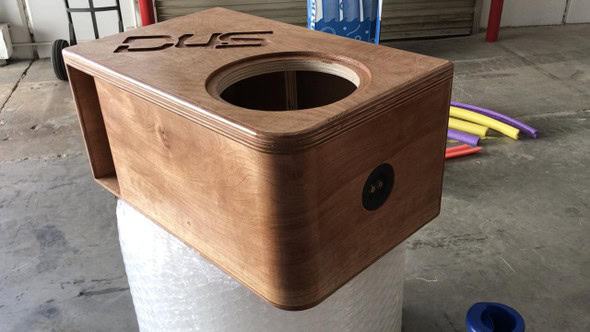
A custom subwoofer enclosure is the difference between a system that fits your car and a system that fits a generic box. Prefab boxes are built for the average trunk. Custom enclosures are built for your vehicle, your sub, and your tuning goals. This guide covers what built to order enclosures actually get you, how the air space and tuning math works, and when custom is worth the money.
What Makes an Enclosure Custom
A custom subwoofer enclosure is built to a spec, not to a shelf. Three things define it:
Vehicle fitment. The box is shaped to the actual space in your car or truck: the trunk contours, the seat angle, the wheel well humps, the cab wall. A vehicle specific box uses space a generic box wastes, and it fits without fighting.
Subwoofer matching. The net air space is sized to the exact sub you are running, using the manufacturer’s recommended enclosure volume. Not a generic “fits most 12s” number, but the volume your sub’s spec sheet calls for.
Tuning. If you go with a ported box instead of a sealed design, the port is tuned to a frequency you choose, usually 32 to 36 Hz for daily drivers. The port area is sized for the sub’s excursion so it does not chuff at high volume.
A prefab box might hit one of those. A custom enclosure hits all three.
The Air Space Advantage
The biggest advantage of a built to order enclosure is net air space that is actually correct. Prefab boxes are built to a price, and the net volume is often an afterthought. A prefab “dual 12” box might net out to 1.0 cubic foot per sub after the port and bracing, when the subs want 1.5. The subs then sound peaky, lose low end, and can bottom out on deep bass.
A custom enclosure is built around the sub’s spec: the builder calculates the gross volume, subtracts the sub displacement, the port volume, and the bracing, and delivers a box that nets out to the target. That is why the same sub and amp sound dramatically better in a custom box. The sub is finally working in the air space it was designed for.
Tuning: The Custom Advantage
With a ported custom enclosure, you pick the tuning frequency, and that changes the character of the whole system. A 32 Hz tune gives deep, musical low end that plays everything. A 36 Hz tune gives more punch and output in the mid bass. A 40 Hz tune is a one-note SPL monster that rolls off fast below 40.
Custom also means the port is sized right. Port velocity is the hidden killer of ported boxes: if the port is too small for the air the sub moves, it chuffs and whistles at high volume. A custom builder sizes the port area to the sub’s excursion and the box’s volume, so the port stays quiet and the output stays clean.
Vehicle Specific vs Fully Custom
There are two levels of custom, and both have their place.
Vehicle specific boxes are designed for a specific make, model, and year, but they are built in volume. They fit the vehicle perfectly, and they are usually designed around a common sub size and air space. This is the right choice for most people: you get the fitment without the wait or the cost of a one-off build. Truck owners especially benefit, because behind the seat and under the seat spaces are so vehicle specific.
Fully custom built to order boxes are built one at a time to your exact sub and your exact vehicle. This is the choice when you are running an unusual sub, a specific tuning goal, or a vehicle with no off the shelf option. You get exactly the net volume, tuning, and shape you asked for, and you wait for it.
When Custom Is Worth It
Custom is worth it when the box is the bottleneck, and the box is almost always the bottleneck. If you have a good sub and a good amp but the bass sounds wrong, the enclosure is the first suspect. A custom box fixes the air space, the tuning, and the fitment in one move.
Custom is also worth it for trucks and SUVs, where generic boxes simply do not fit. A vehicle specific enclosure for a crew cab truck uses the space behind the seat that a generic box cannot, and it lets you run a bigger sub than the space would otherwise allow.
Custom is not worth it when the rest of the system is the problem. If your amp is clipping, your electrical system is sagging, or your sub is undersized for your goals, a custom box will not fix those. Fix the system, then let the box do its job.
Small Enclosures: 6.5 Inch and Under Seat Boxes
Custom really shines in small spaces. A 6.5 subwoofer box, for example, is a niche product: most prefab options are generic and poorly matched to the driver. A custom 6.5 enclosure can be built to the sub’s exact spec and shaped to fit under a seat, in a kick panel, or in a center console. The same logic applies to any small enclosure: the smaller the box, the more the air space math matters, and the more a generic box hurts.
Under seat enclosures are the same story. The space under a truck seat is a weird shape with brackets and carpet and seat rails in the way. A vehicle specific under seat box uses every inch, and it is built thin enough to clear the seat. That is why truck owners go custom more than anyone.
What to Look For in a Custom Enclosure Builder
A good custom enclosure builder gives you the specs, not just the price. You should know the net air space, the tuning frequency, the port area, and the wood thickness before you order. 3/4 inch MDF is the standard, and the box should be glued, screwed, and braced.
Ask about the sub it was designed for. A builder who asks what sub you are running and what music you listen to is doing it right. A builder who sells the same box for every sub is selling a prefab with a custom label.
Ready to go custom? Browse our built to order subwoofer boxes and vehicle specific enclosures, and get a box built around your sub and your vehicle.
Custom Enclosure Questions, Answered
How long does a built to order box take?
Most builders quote two to four weeks from order to shipment, depending on their backlog and the complexity of the design. Vehicle specific boxes that are already designed often ship faster. Ask for the current lead time before you order, because it changes with demand.
What measurements do I need to provide?
For a vehicle specific box, usually just your year, make, and model, because the builder already has the space mapped. For a fully custom build, measure the width, depth, and height of the space where the box will sit, plus obstructions like wheel wells or seat brackets. Your sub choice matters as much as the tape measure numbers.
Is a custom box worth it over a prefab?
Yes, when the box is the bottleneck. A custom enclosure matches the net air space and tuning to your exact sub, which is where most prefab boxes fall short. If your vehicle has no off the shelf option, or you are running an unusual sub, custom is often the only way to get the bass you paid for.
What wood is best for a subwoofer box?
3/4 inch MDF is the standard for subwoofer enclosures because it is dense, affordable, and does not resonate. Baltic birch plywood is the upgrade option: lighter and stronger, but more expensive. Avoid particle board, because it falls apart under pressure and moisture.
Keep Building
- Subwoofer Boxes: Air Space, Tuning, and Fit Explained
- 2 12 Inch Subs: Dual 12 Box, Amp, and Wiring Guide
- Subs for Trucks: Under Seat and Behind Seat Box Guide
Every build is measured, cut, and carpeted for the exact vehicle and sub combination you run. Start with the subwoofer boxes and custom enclosures at Down4Sound, including built to order designs for your exact vehicle. Financing is available for the box, the drivers, and the install gear on one invoice.