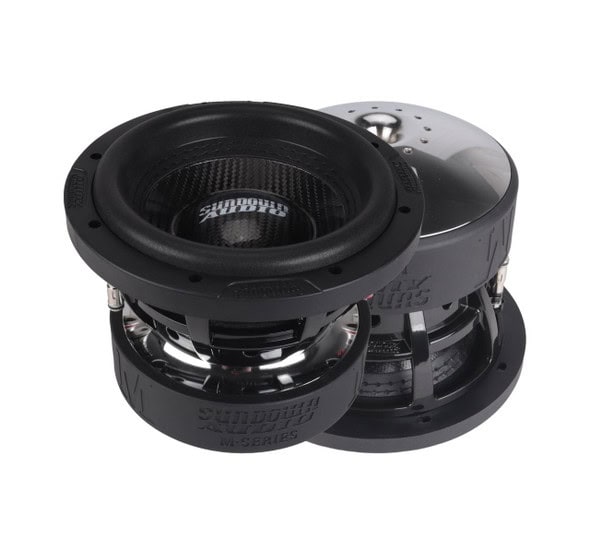
Running 2 12 inch subs is the classic way to get serious bass in a car or truck. Two 12s give you double the cone area of a single 12, which means more output and more low end, but only if the box, the amp, and the wiring are all right. A pair of 12s in a bad box will lose to a single 12 in a good one. This guide covers dual 12 box air space, tuning, amplifier power, and wiring, so you can build a setup that actually works.
Why Two 12s Instead of One Bigger Sub
Cone area is the physics that matters. Two 12 inch subs have roughly 226 square inches of cone area combined, versus about 113 for a single 12. That is double the air movement at the same excursion, which translates to more output and deeper bass. Two 12s also share the power, so each sub works less hard for the same total output, which means less distortion and more headroom.
The tradeoff is space and cost. A dual 12 box is big: a ported dual 12 enclosure typically needs 3.0 to 4.0 cubic feet gross, plus the port. That fits in a full size trunk or behind the seat of a crew cab truck, but it will not fit in a coupe or a small hatchback. If you have the space, two 12s are the proven way to get loud. If you do not, a single well built 12 or a pair of 10s is the smarter play.
Dual 12 Box Air Space and Tuning
The sealed or ported box for two 12s is not just a bigger version of a single 12 box. Each sub needs its own share of net volume, and the port has to be sized for the combined air movement.
For a sealed dual 12 box, plan on 0.8 to 1.25 cubic feet of net volume per sub, so 1.6 to 2.5 cubic feet total. For a ported dual 12 box, plan on 1.25 to 1.75 cubic feet per sub, so 2.5 to 3.5 cubic feet net, tuned to 32 to 36 Hz for daily use. The port needs roughly 12 to 16 square inches of cross sectional area per cubic foot of net volume, and a dual 12 box moving that much air needs a serious port to avoid chuffing.
Check the net volume on any prefab dual 12 box before you buy. Many budget dual 12 boxes advertise big gross numbers but net out small after the port and the subs, and a pair of 12s crammed into 2.0 cubic feet net will sound peaky and lose the low end. A quality prefab like the Down4Sound Pro Fab 12 lists its real specs: a dual 12 ported enclosure built from 3/4 inch MDF with a proper tune, which is what a pair of 12s needs to perform.
Matching Subs to the Box
The subs have to match the box, and the box has to match the subs. If you already own a dual 12 box, check its net volume and tuning, then pick subs whose spec sheets line up. If you are buying the box and subs together, buy them as a matched pair.
Two things matter most: the sub’s recommended enclosure volume and its impedance. Dual voice coil subs give you wiring flexibility, which matters for the amp. A pair of dual 4 ohm subs can be wired to a 1 ohm or 4 ohm final load, and a pair of dual 2 ohm subs can be wired to 0.5 or 2 ohms. Pick the wiring that lands on the amp’s rated load, because that is where you get full power.
Amplifier Power for Two 12s
A pair of 12s wants real power. Plan on 500 to 800 watts RMS total for a daily sealed setup, and 800 to 1500 watts RMS for a ported setup that is meant to be loud. The subs’ combined RMS rating is the ceiling, and a monoblock amp should deliver 75 to 100 percent of that at the impedance you wire to.
Do not underpower a dual 12 setup. Clipping a small amp into a pair of 12s is the fastest way to cook voice coils, because the clipped signal is DC-like and the subs keep moving past their limits. A bigger amp with clean headroom is safer than a small amp pushed to its limit. Set the gain with a multimeter or an oscilloscope, and set a subsonic filter around 28 to 30 Hz if your amp has one, especially with a ported box.
Wiring Two 12s: Impedance and Loads
Wiring a pair of dual voice coil subs is straightforward once you know the target. The two common targets are 1 ohm and 2 ohm final loads, depending on the amp.
- Pair of dual 4 ohm subs: wire each sub’s coils in parallel for 2 ohms per sub, then wire the subs in parallel for a 1 ohm final load. Or wire each sub’s coils in series for 8 ohms per sub, then parallel the subs for 4 ohms.
- Pair of dual 2 ohm subs: wire each sub’s coils in parallel for 1 ohm per sub, then parallel the subs for 0.5 ohms, which only works with amps rated for it. Or wire each sub’s coils in series for 4 ohms per sub, then parallel for 2 ohms.
Use 8 gauge or larger speaker wire for the runs, and make sure the amp’s power and ground wire are sized for the current draw. A 1000 watt amp needs 4 gauge or larger, with a fuse within 18 inches of the battery.
Dual 12 with Box and Amp Packages
If you are starting from zero, a 12 inch subwoofer with box and amp package is the fastest way to a working system, and it is usually cheaper than buying the pieces separately. The key is checking that the package is actually matched: the box’s net volume and tuning should fit the subs, and the amp should deliver real RMS power at the wiring load, not inflated peak numbers.
A loaded dual 12 box with a matching amp is a legit daily setup if the specs are honest. Look for the RMS rating of the amp, the net volume and tuning of the box, and the subs’ RMS ratings. If the package lists peak watts instead of RMS, or no box specs at all, keep looking.
Ready to run a pair of 12s? Check out the Down4Sound Pro Fab 12 dual 12 inch ported enclosure, browse our prefab dual 12 boxes, and pair them with 12 inch subwoofers that match the box’s air space.
Common Questions About Running Two 12s
What amp do I need for two 12 inch subs?
Plan on 500 to 800 watts RMS total for a daily sealed setup and 800 to 1500 watts RMS for a ported setup that is meant to be loud. The amp should deliver 75 to 100 percent of the subs’ combined RMS rating at the final ohm load. A bigger amp with clean headroom is safer than a small amp pushed into clipping.
Should two 12s be wired to 1 ohm or 2 ohms?
Wire to the load your amp is rated for, because that is where it makes full power. Many monoblock amps are 1 ohm stable and deliver their best power there, while others top out at 2 ohms. Match the amp’s RMS output at the final ohm load to the subs’ combined RMS rating.
How much air space do two 12s need?
Most two 12 setups need 1.25 to 2 cubic feet of net volume per sub, depending on the sub and the box type. That works out to roughly 2.5 to 4 cubic feet of net volume for the pair. Check each sub’s spec sheet, because recommended volume varies by model.
Sealed or ported for two 12s?
Sealed is smaller, tighter sounding, and easier to get right. Ported is louder with more low end, but the box is bigger and needs proper tuning, usually 32 to 36 Hz for daily use. Pick based on your available space and how loud you want the setup to play.
Keep Reading
- Subwoofer Boxes: Air Space, Tuning, and Fit Explained
- 1200 Watt Amp Guide: What 1200W RMS Really Gets You
- 0 Gauge Wire Kit Guide: What to Buy for Big Amps
- Car Audio Brand Merch: Rep Your Sound System in Style
Two twelves only hit the way they should when the box volume and the amp match the pair. Pick your subwoofers at Down4Sound and match them with the right box and power. Financing is available so the pair of twelves, the amp, and the wiring can all go home now.