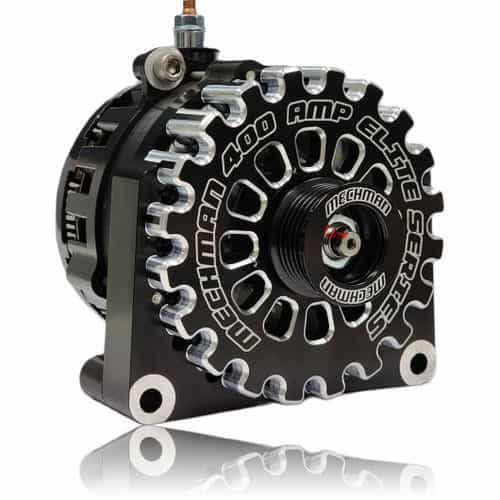
A car audio high output alternator is the difference between a system that hits hard all day and one that sags, dims, and goes into protect mode. The factory alternator on most vehicles was sized for the car, not for a 2,000 watt amplifier. This guide shows you exactly how to size a high output alternator for car audio, what specs to compare, and where the money is best spent.
Why Car Audio Kills Stock Alternators
Your stock alternator was designed to keep a stock electrical system alive. It makes its rated current at high RPM, drops off hard at idle, and is not built for sustained high current draw. A car audio amplifier is a different kind of load: it pulls current in bursts with the music, and the average draw of a big system can exceed the alternator’s continuous rating.
When the alternator cannot keep up, voltage drops. The amplifier output drops with it, the lights dim, and the amp can shut down. That is not a battery problem or a wiring problem. It is a charging capacity problem, and the only real fix is a high output alternator for car audio sized to the system.
What Size Do You Need?
Use the current draw of your amplifiers, not the wattage on the box. Here is the formula:
Amplifier RMS power / efficiency / system voltage = current draw
A Class D amplifier is roughly 80 percent efficient. A Class A/B amp is 50 to 60 percent. Use 13.8 volts as the running voltage.
1,000 watts RMS (Class D): 1000 / 0.80 / 13.8 = 90 amps. Add 40 amps for the vehicle and 25 percent headroom. You need about 165 amps. A 200 to 250 amp alternator covers it.
2,000 watts RMS (Class D): 2000 / 0.80 / 13.8 = 181 amps. Add 40 for the vehicle and headroom. You need about 275 amps. A 320 amp alternator is the right size.
3,000 watts RMS (Class D): 3000 / 0.80 / 13.8 = 272 amps. With vehicle load and headroom you are at 390 amps. A 400 amp alternator is the minimum for a system this size.
5,000 watts RMS and up: You are past what a single alternator does comfortably. Run a 400 amp unit plus a serious battery bank, or a dual alternator setup.
These numbers assume music, not test tones. If you run the system at full power continuously, add more headroom.
Idle Output Is the Spec That Matters
Here is what most buyers get wrong: they compare max ratings, but the alternator only hits max output at 2,500 RPM and up. At idle, output drops. A stock 130 amp alternator might make 60 amps at idle. A good high output alternator should make 60 to 80 percent of its rating at idle.
For car audio, idle output is the spec that keeps your system stable at stoplights and in traffic. When you compare car audio high output alternators, ask for the idle rating at your vehicle’s idle RPM. A 320 amp unit that makes 200 amps at idle is worth more to you than a 400 amp unit that makes 150.
What to Look For
Amp rating matched to your system. Use the math above. Oversizing by a little is fine. Oversizing by a lot wastes money and can strain the belt system.
Idle output. Confirm it before you buy. This is the number that matters in real driving.
Voltage setpoint. Most units charge at 14.4 to 14.8 volts, which is right for AGM batteries. If you run lithium, you need a lower setpoint or an external regulator.
Fitment. Case size, pulley, and connector must match your vehicle. A 400 amp unit is physically bigger than a 250 amp unit. Confirm the engine bay clearance before ordering.
Warranty. A high output alternator is a built-to-order part. Buy from a shop that backs it.
The Big 3 Upgrade Goes With It
A high output alternator cannot do its job through factory wiring. The Big 3 upgrade replaces the alternator positive to battery, battery negative to chassis, and engine block to chassis with 1/0 or 2/0 OFC wire. Do this at the same time as the alternator. A 320 amp alternator on 8 gauge wire is a bottleneck, and the voltage drop just moves to the wiring.
vs Extra Batteries
A common mistake is adding batteries instead of fixing the alternator. Batteries add reserve capacity, which helps for short bursts, but they do not add charging capacity. If the alternator cannot replace what the system uses, the batteries just drain slower. The correct order is: alternator sized to the system, Big 3 wiring, then battery reserve if you still need it for long demo sessions.
The Bottom Line
Size your car audio high output alternator from the amplifier’s real current draw, add the vehicle load and headroom, and pay attention to idle output. Do the Big 3 wiring at the same time. That combination holds voltage under bass, keeps the lights steady, and protects your amplifier.
Shop the car audio high output alternators at Down4Sound for 200 to 400 amp options. GM truck owners running 2,000 watts or more should look at the 400 amp car audio alternator for GM trucks, and Ford 6.2L owners have a proven option in the 320 amp car audio alternator for Ford 6.2L. Match the alternator to the system and the system will take care of the rest.