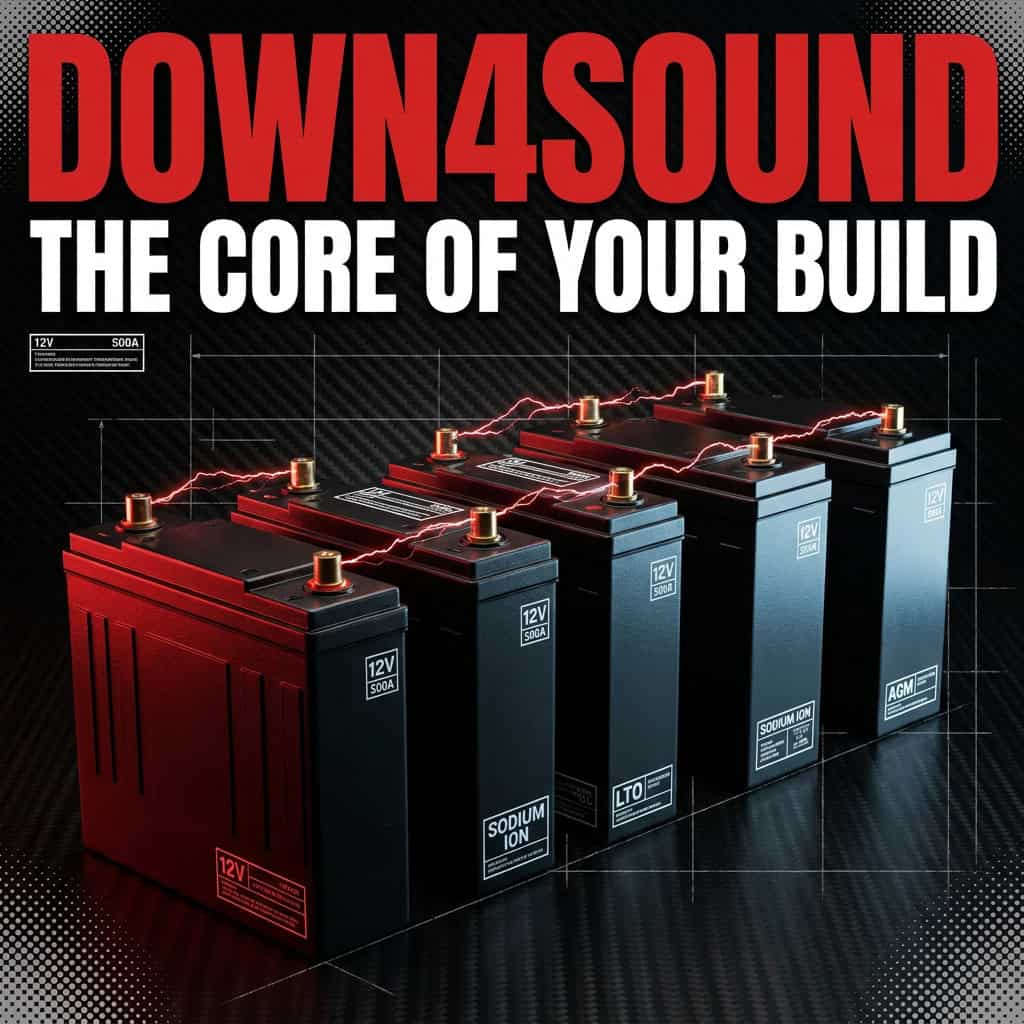
Your amplifier can only make power if the voltage stays up. A stock battery is built to start the engine and run the factory electronics. It was never meant to feed a 2,000 watt sub amp pulling 200 amps on every bass hit. When voltage sags, the amp clips, the lights dim, and the bass goes soft. The fix is a car audio battery built for current delivery, sized to the system. This guide covers the chemistry, the sizing math, and how to install a second battery the right way.
The 2,500 watt line
Here is the rule we tell every customer: if your system makes more than 2,500 watts RMS, run lithium. Below that, a good AGM does the job for less money.
The reason is simple. Lead acid batteries sag under big current draws. A lithium or sodium ion pack holds voltage much stiffer, so a 3,000 watt amp gets the voltage it needs on every hit. Pushing a big system on AGM means stacking multiple batteries, adding weight, and still watching voltage dip. One lithium pack does the same job from a box that weighs less than a gallon of milk.
AGM vs lithium
AGM. Absorbed glass mat is the standard for car audio. It is a sealed lead acid battery with the electrolyte held in glass mats, which makes it spill proof, vibration resistant, and able to deliver strong current bursts. AGM batteries also handle deep cycling far better than a standard flooded battery. For systems up to about 2,500 watts RMS, a quality AGM is the right call. It is affordable, safe, and works with a stock charging system.
Lithium. Two chemistries matter here: LTO (lithium titanate) and sodium ion. Both deliver big current from a tiny package, hold voltage higher under load, and weigh a fraction of an AGM. A 6 amp hour LTO pack can support a 3,000 to 5,000 watt system. The tradeoffs are price and charging rules. Lithium needs a charging profile that matches its chemistry, and most lithium packs do not belong under the hood. If you are over 2,500 watts, or competing, lithium is the answer. Below that, AGM is the sensible spend.
Sizing by wattage
Battery capacity is measured in amp hours, but for car audio the spec that matters is current delivery. Here is how we size systems:
- Under 1,000 watts RMS: a quality AGM starting battery under the hood is usually enough. Upgrade the stock battery to a high CCA AGM if the stock one is weak.
- 1,000 to 2,500 watts RMS: add a second AGM battery in the trunk, 50 to 100 Ah, wired in parallel with the starting battery. This is the most common serious build.
- 2,500 to 5,000 watts RMS: lithium. A single LTO or sodium ion pack sized to the system, paired with a high output alternator.
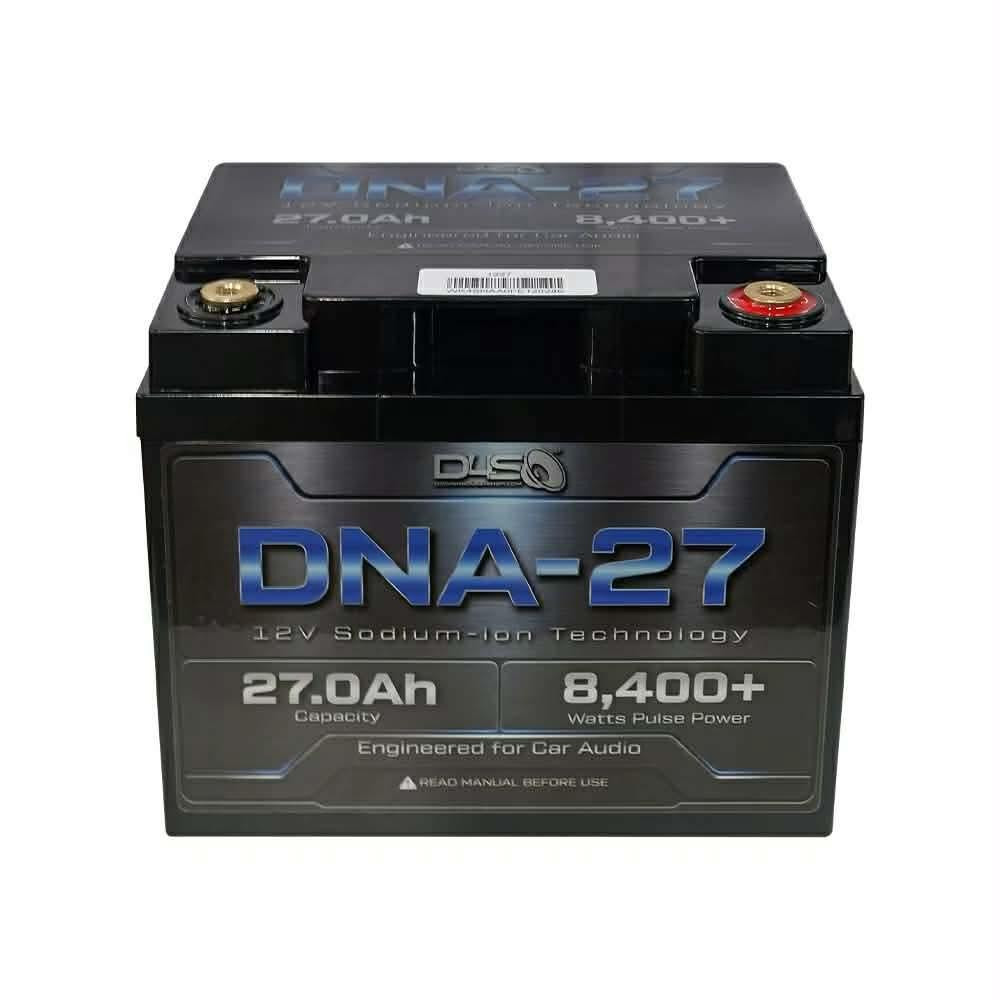
- 5,000 to 9,000 watts RMS: a DNA-27 sodium ion pack. One pack covers this range, paired with a high output alternator.
- 9,000 to 15,000 watts RMS: two DNA-27 packs in parallel. At this level the alternator and the battery bank both matter, and the wiring has to be right.
The old rule of thumb is dead
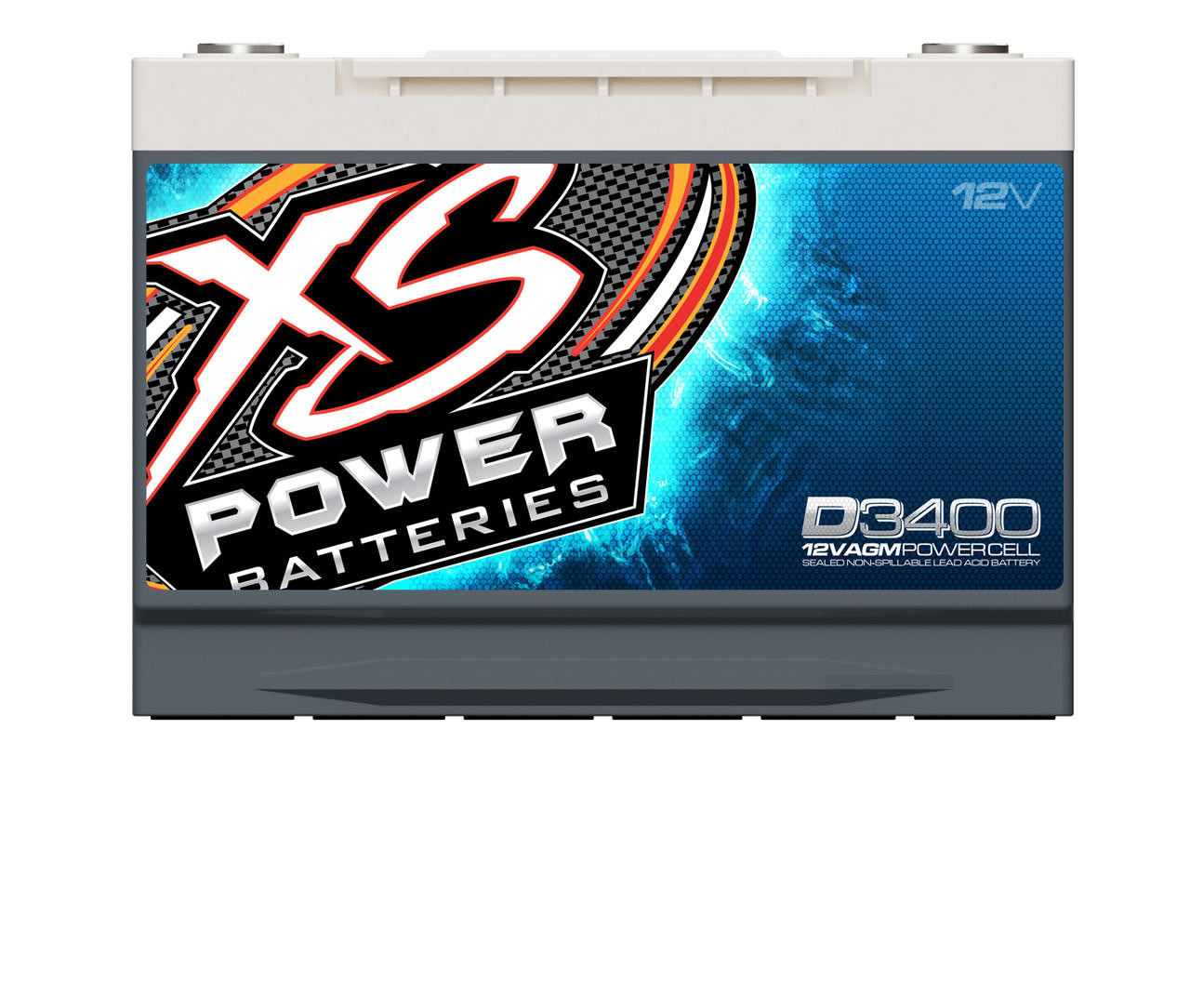
The old AGM sizing rule was 1 amp hour per 100 watts RMS. By that math, the D3400’s 80 amp hours should support 8,000 watts. XS Power rates it for 2,500 to 4,000. The rule was optimistic even for AGM.
Lithium and sodium ion break it completely. Amp hours measure capacity, but a big system needs current delivery, and these chemistries deliver far more current per amp hour:
| Battery | Amp hours | Rated for | Watts per amp hour |
|---|---|---|---|
| XS Power D3400 (AGM) | 80 | 2,500-4,000W | 31-50 |
| D4S LTO 6.0 (lithium) | 6 | 3,000-5,000W | 500-833 |
| DNA-13 (sodium ion) | 13.5 | 3,500-5,500W | 260-410 |
| DNA-27 (sodium ion) | 27 | 6,000-9,000W | 220-330 |
By the old rule, the LTO 6.0’s 6 amp hours would be good for about 600 watts. It is rated for 3,000 to 5,000. The DNA-13’s 13.5 amp hours would be good for about 1,350 watts. It is rated for 3,500 to 5,500. With lithium and sodium ion, amp hours stop being the sizing number. The pack’s rated wattage and burst current are what matter.
The picks
These are the car audio batteries we recommend, from mild to wild.
XS Power D3400 (AGM). The D3400 is a Group 34 AGM rated for 2,500 to 4,000 watt systems. 80 amp hours, 3,300 max amps, and a 3 year warranty. It drops into most factory battery locations and works as either a starting battery upgrade or a second battery. We recommend it for systems up to about 2,500 watts RMS, and lithium above that.
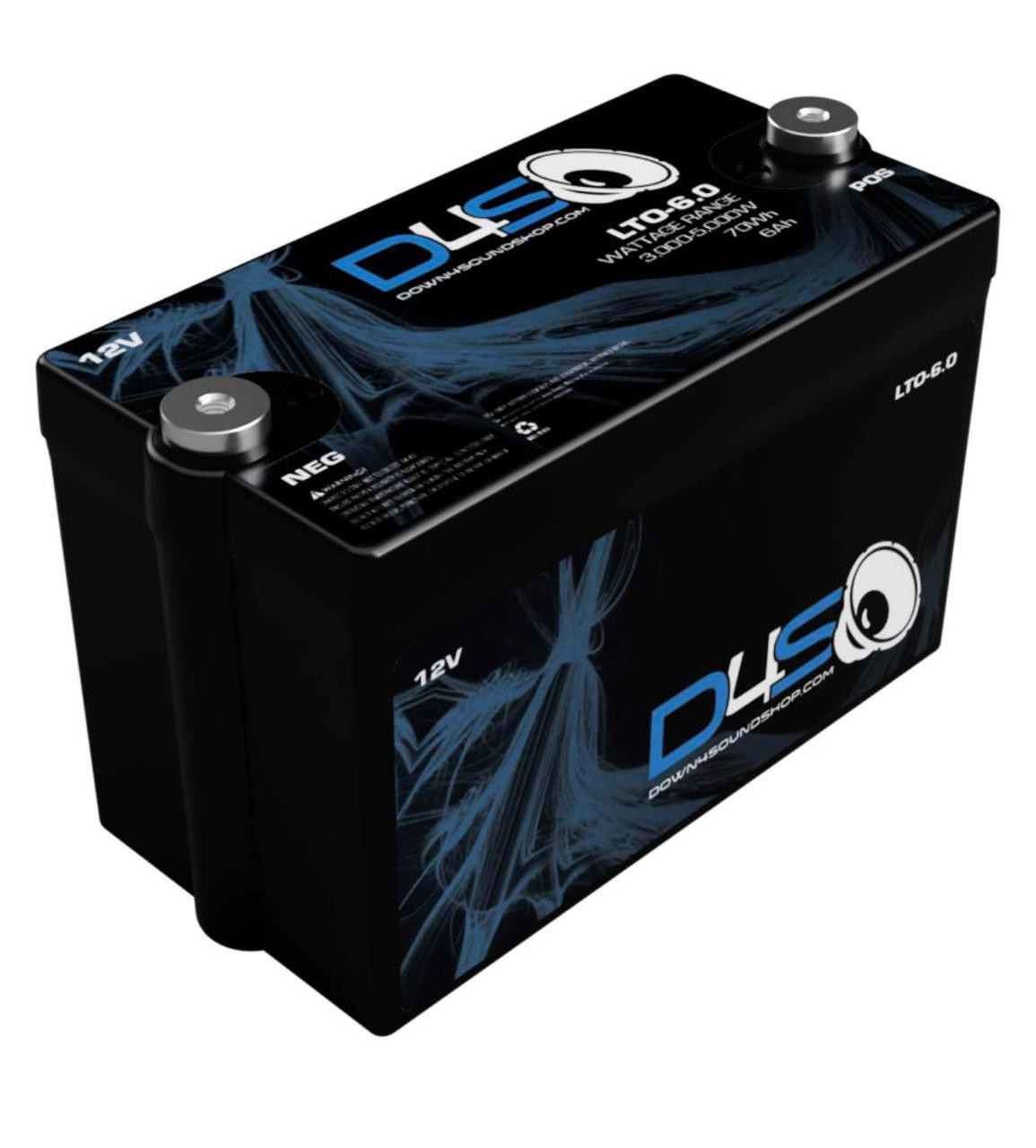
D4S LTO 6.0 (lithium). Our first lithium battery and still the smallest. Four pounds, 6 amp hours, and it supports 3,000 to 5,000 watts depending on your alternator. With a 120 to 160 amp alternator it is rated for 3,000 watts. With a 240 to 270 amp alternator, 4,000 watts. With a 320 to 370 amp alternator, 5,000 watts. It charges on a factory charging system, no voltage boosting needed. If your vehicle cannot support a high output alternator, stack a deeper reserve with a bus bar system. Max charge voltage is 14.8V, and it never goes under the hood. Shop the LTO 6.0.
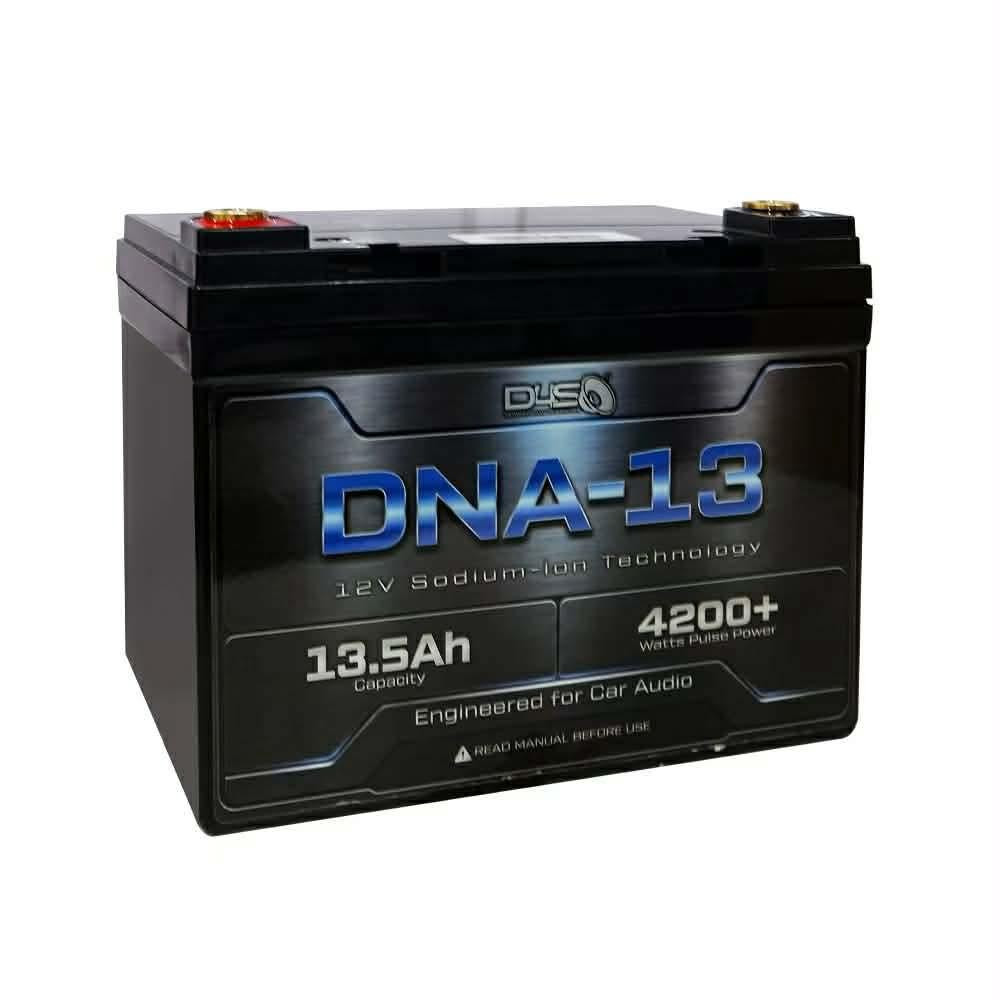
DNA-13 (sodium ion). 13.5 amp hours, 6 pounds, rated for 3,500 to 5,500 watt systems. It holds voltage steady through a full 3 second 400 amp burst, which keeps amps out of protect mode. Rated for 10,000 plus full power cycles and works down to -29°C, where lead acid and most lithium packs struggle. Shop the DNA-13.
DNA-27 (sodium ion). The big brother. 27 amp hours, 10 pounds, rated for 6,000 to 9,000 watt systems. It holds voltage steady through an 800 amp burst. This is the pack for serious daily systems and competition builds. For 9,000 to 15,000 watt systems, run two DNA-27 packs in parallel. Shop the DNA-27.
Installing a second battery
A second battery install is straightforward if you follow the rules.
- Mount the battery in the trunk or under a seat, in a sealed battery box. AGM is spill proof, but it still needs to be secured and isolated from the cabin. Lithium and sodium ion packs never go under the hood. Lithium hates heat. Modern gas engines push under hood temperatures past 150 degrees, and lithium does not survive that kind of heat. Keep it in the cabin or trunk, away from anything that hot.
- Run 0 gauge OFC from the starting battery positive to the second battery positive, fused at both ends. The fuse at the front battery protects the run. The fuse at the rear protects the amp.
- Ground the second battery to the chassis with a short, fat ground, the same gauge as the power run. Ground the amp to the same point.
- Keep the starting battery in the circuit. The alternator charges both batteries through the parallel connection. Most systems run a direct parallel connection with proper fusing. An isolator is an option, not a requirement.
- Do not ground the second battery to the first battery’s negative terminal through a long wire. Chassis grounds are shorter and carry the return current better.
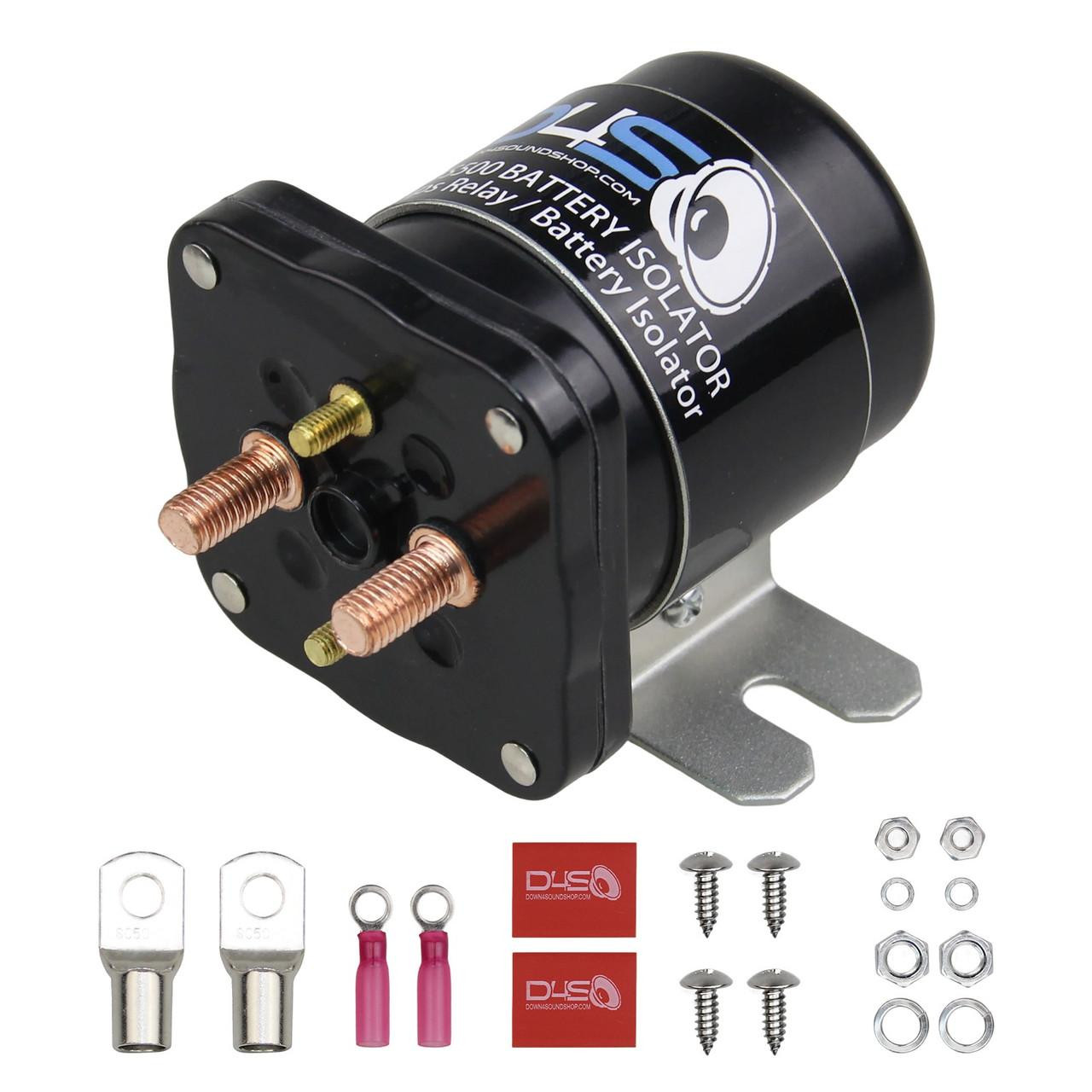
Want the batteries isolated? The D4S BIS500 is a 500 amp battery isolator that separates the starting battery from the audio bank when the engine is off, so the system can never drain the starting battery. Shop the BIS500.
Second alternator for big systems
Once you pass about 8,000 watts RMS, one alternator stops being enough, even a big one. Here is the simple version of why.
An 8,000 watt system pulls roughly 550 amps at full tilt. A single high output alternator, even a 370 amp unit, cannot feed that and run the car at the same time. The battery bank covers the gap for a while, then voltage sags and the bass goes soft.
A second alternator doubles your charging current. The batteries stay topped up, voltage holds, and the system plays hard for as long as you want instead of draining down. If your vehicle can take a second alternator, at this power level it is the right move. Not every car has the room or the belt routing for one, so check what fits before you buy.
Audio battery vs starting battery
A starting battery is built for one job: a huge current burst for a few seconds to crank the engine. It is not built for repeated deep discharges, and running a big amp off one shortens its life fast. An audio battery, whether AGM or lithium, is built for sustained high current delivery and deep cycling. If you are upgrading one battery to run both the car and the audio system, buy an AGM with high CCA and deep cycle capability, not a cheap flooded starting battery.
If you remember one thing
Match the battery to the system. AGM up to about 2,500 watts RMS, lithium above that, and do not skip the alternator. A big battery bank on a stock alternator just drains slower. The alternator has to keep up or the voltage still drops.
Shop car audio batteries at Down4Sound, from the XS Power D3400 to the DNA-27, and check our high output alternators to finish the electrical side of the build.